GarmentFlow ERP · The rest of the business
Apparel ERP: sales, purchasing, stock, accounting
Buying fabric from a mill, selling uniforms to a company on thirty-day terms, quoting for made-to-measure shirts — none of that is a production problem. It's a quotation, an order, an invoice, a payment, a tax entry and a stock movement, and it has to be done properly whether or not the factory behind it is running well.
Sales
Quotation to collection
Quotations and sales orders — the proforma your customer signs off — delivery notes, invoices and credit notes, customers and price lists, and collections chased against the order. A uniform contract, a wholesale run and a one-off tailoring job all end up in the same ledger.
More on orders →
Purchasing
RFQ to bill, at landed cost
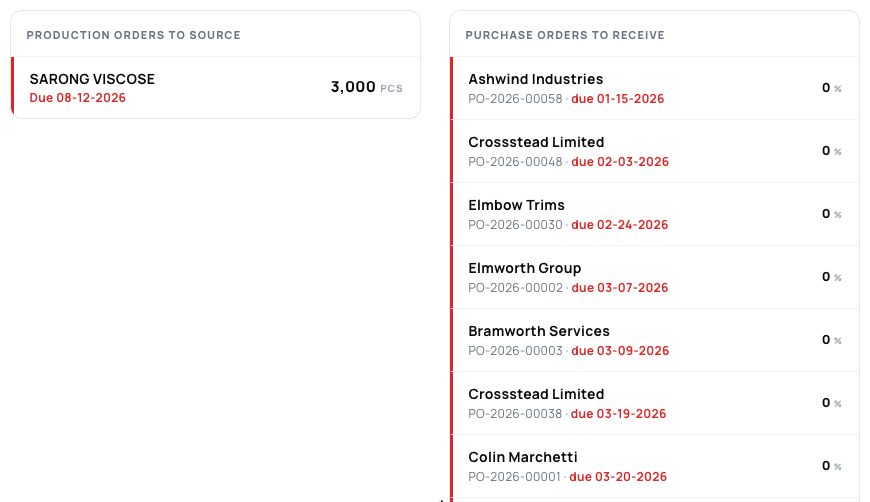
Requests for quotation to fabric and trim suppliers, supplier quotations, purchase orders, receipts and bills. Landed cost puts duties, freight and insurance onto imported fabric so the item value is the real one.
More on materials →
Stock
Warehouses, batches and valuation
Multiple warehouses, batches and serial numbers, the stock ledger, reconciliation and valuation on FIFO or LIFO. Finished garments, raw material and spare parts in the same inventory.
More on inventory →
Accounting
Multi-currency, multi-company, your accountant's valuation
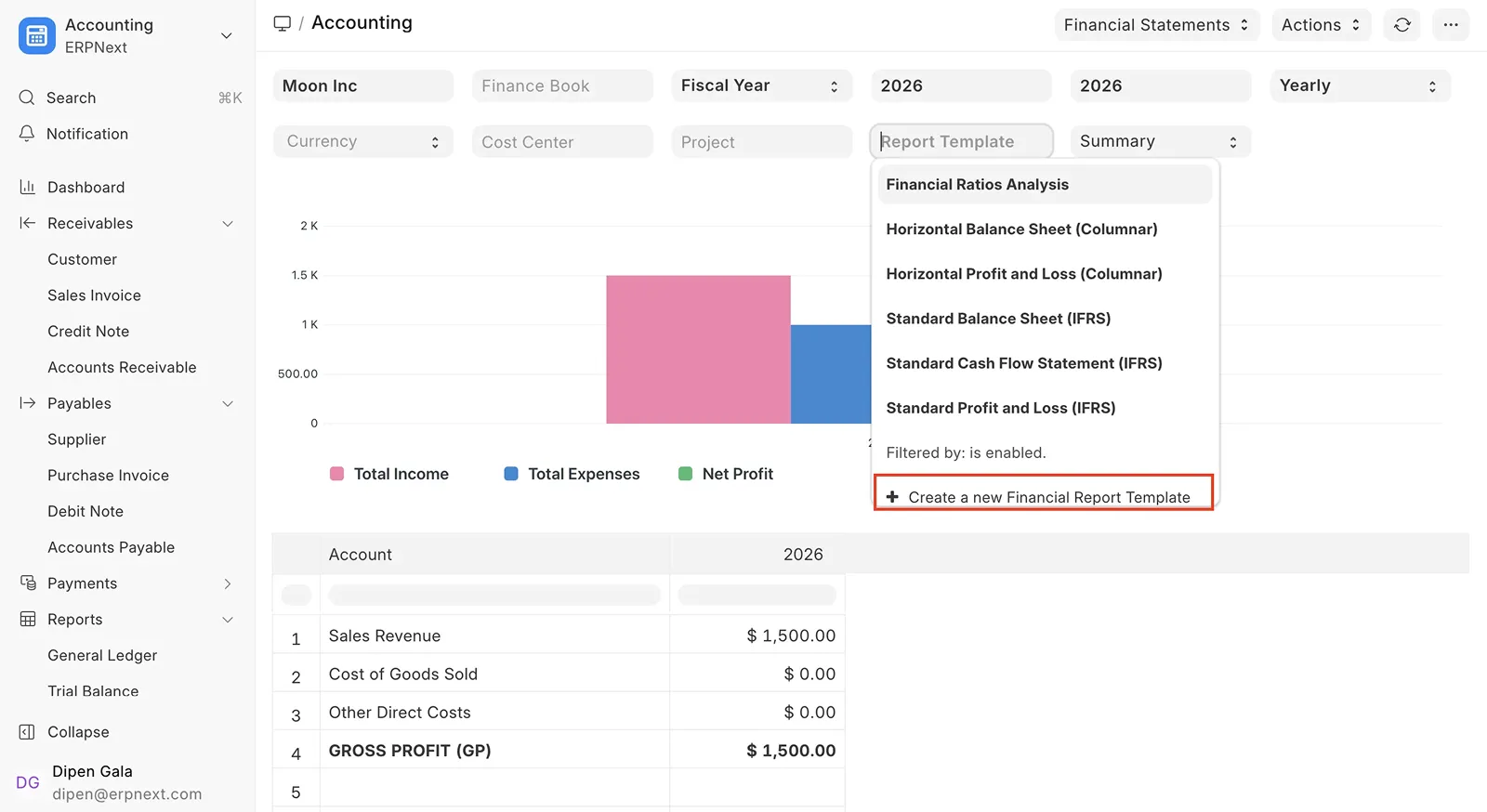
Receivables and payables, payment entries, multi-currency for export sales and multi-company if you run more than one, chart of accounts, cost centres and financial statements, with tax templates configured for your country. It isn't a light version bolted on for show — it's ERPNext underneath, fifteen years of it.
More on costing →
Fixed assets
The balance sheet reflects the floor
Sewing machines, cutting tables, generators and vehicles held as assets with their depreciation schedules, so what is on the balance sheet is what is on the floor.
More on machines →
Closes daily, not monthly
GarmentFlow ERP replaced a separate ERP, manufacturing software, HR software, CRM and accounting system. Email, documents and pattern-making stay outside it — everything else runs here.
Where the numbers come from
This is where the factory's costs finally land. Material cost from purchasing, labour cost from the floor and overheads from the ledger, all against the same orders and cost centres — which is the whole reason a factory runs one system instead of four.
A few we get asked
We already have an accountant and a system.
Run them in parallel for a quarter. Nobody has to switch on day one.
Is this suitable for a business that isn't only manufacturing?
It's a general ERP with a garment layer on top. Trading, retail and made-to-measure all fit.
Is it really open source underneath?
ERPNext is. You're paying for the garment layer, the hosting and the support.
Priced by the size of your factory, not per user
Unlimited users on unlimited devices, every plan.
- Studio $179
- Factory M $450
- Factory L $900
- Factory XL $1,800
- Enterprise talk to us
Book a walkthrough
See your factory in GarmentFlow ERP.
Twenty minutes, no slides, a real factory's data on screen. We reply within one business day.
Faster on WhatsApp?
Message us →